The Hidden Complexity of Mexican Oregano: From South Texas to Southern Mexico
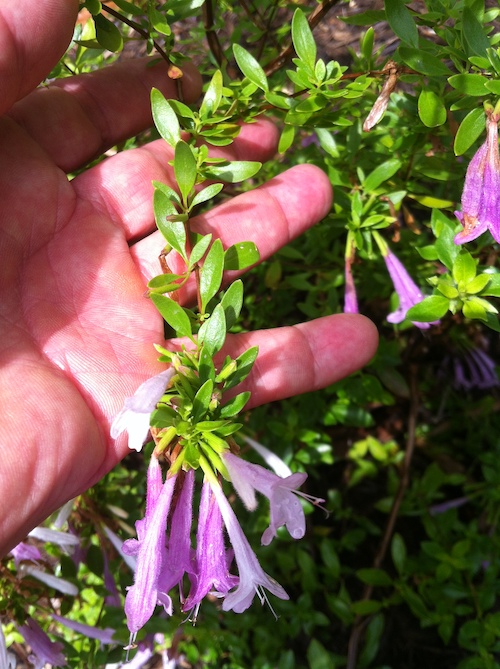
When shopping for Mexican oregano, you might assume it’s just a spicier version of the Mediterranean herb. However, Mexican oregano actually encompasses two distinct botanical categories: the mint-family plants, represented by Poliomintha species in South Texas and northeastern Mexico, and the verbena-family plants, represented by Lippia graveolens in the southern regions of Mexico.
While both share a common culinary label and aromatic properties, their geographic distribution and traditional uses differ. These differences reflect the regional diversity of Mexican gastronomy.
Lippia graveolens: Southern Mexico’s Aromatic Treasure
Lippia graveolens, commonly referred to as Mexican Oregano or “orégano mexicano,” is a member of the Verbenaceae family. It is native to the southern and central regions of Mexico, including the states of Oaxaca, Guerrero, and Michoacán.

This shrub thrives in warm, dry climates, often growing in rocky soils and open scrublands. Its leaves are small, ovate, and highly aromatic, producing a distinctive fragrance that is both robust and slightly citrusy, with hints of camphor and menthol.
These aromatic qualities make it a cornerstone in the culinary traditions of southern Mexico, where its flavor complements rich stews, mole sauces, salsas, and grilled meats.
Poliomintha: The Texas-Mexican Duo
In the Texas Mexican region, a duo of oreganos—Poliomintha bustamante and P. longiflora—has shaped local flavors for generations. Exploring these plants and their histories gives us a closer look at how geography, climate, and culture come together to create the unique tastes of this region.
Range and Habitat of Poliomintha longiflora and Poliomintha bustamante
In the region spanning South Texas and northeastern Mexico, two notable species—Poliomintha bustamante and P. longiflora—thrive, each contributing uniquely to the local flora. Native to this region, each species has its own characteristics and ecological history, shaping the arid and semi-arid habitats they occupy. Their presence offers a window into the diversity and continuity of plant life that bridges the Rio Grande, a natural corridor rather than a strict boundary.
Both plants look nearly identical but upon closer inspection, there are differences in the shape of the leaves and the flavor. They are subtle differences that for decades went unnoticed by botanists.

Poliomintha longiflora thrives in arid, rocky soils with full sun, making it well-suited to dry, open landscapes. Its aromatic, lavender-pink tubular flowers and edible, fragrant leaves have made it an important plant both ecologically and in culinary uses.
Because it occupies a broad geographic range, P. longiflora thrives in diverse microhabitats, demonstrating impressive adaptability to varying environmental conditions.
In contrast, Poliomintha bustamante is more localized, with documented native populations primarily around Bustamante, Nuevo León, often found in desert shrublands and along dry riverbanks. It has a narrower ecological range than P. longiflora, reflecting a more specialized habitat preference.
While its presence north of the Rio Grande in South Texas is plausible based on ecological reasoning, no formal botanical studies currently confirm its nativity there.
Taken together, the region of South Texas and northeastern Mexico provides suitable habitats for both species of Mexican oregano. P. longiflora demonstrates broader distribution and ecological flexibility, while P. bustamante exhibits a more localized presence. The available evidence supports recognizing both species as native to Nuevo León, with P. longiflora additionally native in South Texas, and P. bustamante as a potential, though not yet formally documented, native of South Texas.
Conclusion
Both Poliomintha longiflora and P. bustamante are native to South Texas and northeastern Mexico, each with distinct habitat preferences and documented histories. Their presence underscores the importance of considering plant distributions according to natural ecological boundaries rather than geopolitical lines.
Taken together with Lippia graveolens in southern Mexico, these two categories of Mexican Oregano—Lippia in the south and Poliomintha in the Texas-Mexican region—highlight how local flora shapes regional gastronomy.
Understanding the distinct roles of each oregano in traditional cuisine deepens our appreciation of Mexican culinary diversity, showing how ecology and culture together create unique, regionally defined flavors. Further botanical studies—particularly on P. bustamante’s range in South Texas—would deepen this understanding and highlight the continuity of plant diversity across the region.
Notes / Historical Context

The following notes provide context on how P. bustamante was first recognized as a distinct species:
B.L. Turner, a renowned American botanist and plant taxonomist, spent much of the late 20th century exploring the rich and diverse flora of northeastern Mexico and the southwestern United States. In 1993, he formally described Poliomintha bustamante as a new species in Phytologia 74:164, based on plants he encountered near the town of Bustamante, Nuevo León, Mexico.
Before this formal recognition, these plants had often been grouped under the broader species name Poliomintha longiflora, illustrating how subtle differences in local populations can reveal entirely distinct species.
In his field notes, Turner occasionally labeled the plant “Bustamanta,” likely reflecting a phonetic spelling of the town name or a minor transcription variation. The officially accepted name, Poliomintha bustamante, honors the geographic location where the species was first identified. Turner’s careful observations and herbarium collections were pivotal in establishing this plant as a distinct species within the genus Poliomintha, contributing to our understanding of the region’s botanical richness.
Recipes with Texas Mexican Oregano, Poliomintha
Posole –aromatic broth with chile guajillo
Enchiladas –mild aroma in chile sauce
Chile Relleno –an aromatic tomato caldito surrounds the chile relleno
Enjoyed this article very much. I am finally being successful with growing the Poliomintha – for nearly 2 years now. In North Texas, I learned that it must be securely well protected when our temps drop too low. I consider that around 40 to be on the safe side. I also have it growing near the house, facing south, so it benefits from somewhat of a micro climate.
Just purchased Truly Texas Mexican again as a gift for a friend. She lives in Oregon, and has family roots in Northwestern Mexico. She has been growing Poblanos and was preparing to make Chile Rellanos. That’s when I had the brainstorm of sending her a copy of your book, and some of my Mirasol seeds for the dried Guajillos. I think she’ll be delighted, and with the historical info too…she’s definitely into the history of ancient civilizations!
Thank you!